
Angola economy and finance news
A daily digest of economic news about Angola, with QFLab's reading of the impact for companies and investors. Always linked to the original source.
Week in Angola → Image: Newsweek
Opinion highlights Angola’s role in the global green transition
A Newsweek opinion article portrays Angola as an important country in the global transition towards a green economy. The available excerpt mentions the Lobito Corridor, named after an Angolan port city, but does not explain the underlying arguments, identify the projects involved or detail their expected economic effects.
 Image: Europa Press
Angola and Portugal agree on €1.5 billion in credit lines and a new investment bank
The Angolan and Portuguese governments signed two agreements in Lisbon to expand existing credit facilities and establish additional ones, amounting to €1.5 billion. A third agreement provides for a new investment bank. The available information does not specify the beneficiaries, financing terms or implementation timetable.
 Image: correiokianda
Angola taxation: broadening the taxpayer base rather than adding taxes
The text argues that Angola should prioritise broadening its taxpayer base rather than introducing more taxes. It frames the issue as part of the challenge of maintaining sustainable public finances. The available excerpt outlines this position but provides no specific measures, timelines or mechanisms for putting it into practice.
 Image: Jornal Económico
Angola faces the challenge of making tourism competitive and accessible
Angola’s tourism potential contrasts with the challenge of establishing the sector as an economic driver. The central task is to develop a competitive offering that citizens can afford and that generates wealth across the country’s regions. The emphasis is on turning stated potential into an activity with nationwide economic benefits.
 Image: Plataforma Media
Angola launches tourism investment drive in London
Angola introduced its international «Investe Turismo» campaign in London to attract private funding for hotels, resorts and tourism infrastructure. The description cites approximately $850 million in investment in the sector, but the relevant period cannot be established because the supplied text is truncated.
Angola urges banks to boost financing for production and economic diversification
Luís Epalanga, Angola’s secretary of state for planning, called for banks to play a greater role in financing domestic production. The appeal links increased lending to economic diversification. The available description does not specify funding amounts, lending terms or concrete measures to follow through on the request.
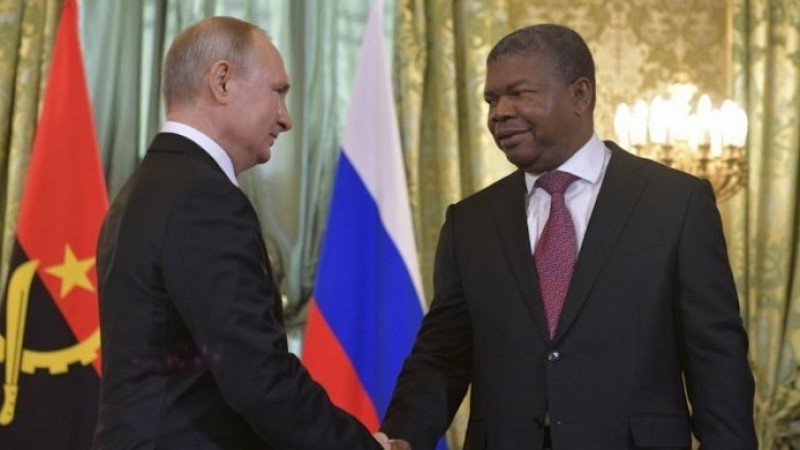 Image: Eurasia Review
Opinion article highlights closer economic ties between Russia and Angola
An opinion article published by Eurasia Review portrays economic relations between Angola and Russia as reaching unprecedented levels. The excerpt traces bilateral ties to the Soviet era and notes that Russian investment, political dialogue and economic cooperation continued after the Soviet Union collapsed. It provides no figures to substantiate the scale of that development.
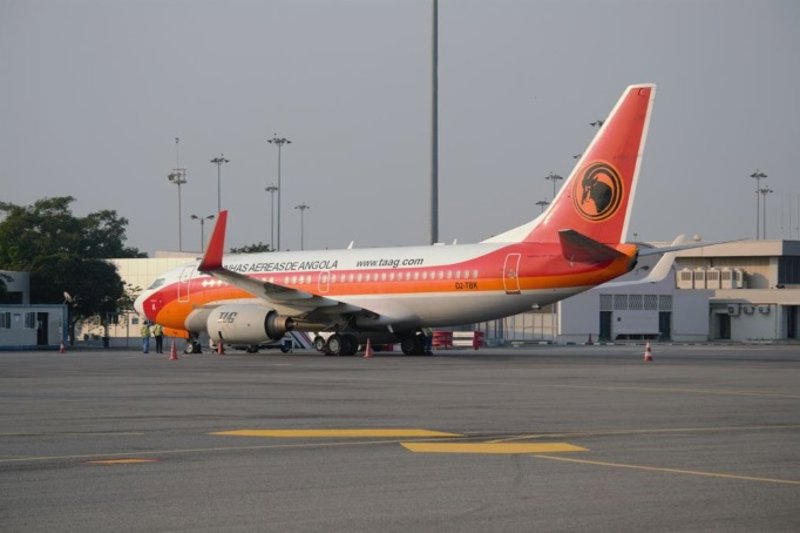 Image: Capitalbolsa
Boeing and Angola sign memorandum to support TAAG’s growth
Boeing and Angola’s Ministry of Transport signed a strategic cooperation memorandum on Friday aimed at developing the country’s aviation sector. The agreement also seeks to support TAAG’s growth. The available information does not specify financial commitments, concrete measures or an implementation timetable.
 Image: Club of Mozambique
Angola central bank cuts key rate by 75 basis points as inflation falls
Angola’s central bank cut its key interest rate by 75 basis points on Tuesday, extending its monetary easing. This was the fourth successive cut, against a backdrop of declining inflation. The available description does not specify the new policy rate or the latest inflation figure.
 Image: Folha 8 Jornal Angolano Independente
Angola’s GDP projected to grow 6.6% in 2026 and 5.1% in 2027
Folha 8 reports growth forecasts for Angola’s economy of 6.6% in 2026 and 5.1% in 2027. The outlook points to expansion while highlighting the country’s heavy dependence on oil exports. The available excerpt does not identify the institution behind the projections or explain the assumptions underpinning them.
 Image: club-k
José Bento Duarte clarifies Nito Alves attended economics 'year zero', not regular course
Angolan professor and researcher José Bento Duarte said Nito Alves attended the Faculty of Economics in Luanda for what was known as 'year zero'. Duarte distinguished this attendance from enrolment in the regular economics course, which he said Alves did not take. The available description provides no further details about that academic background.
 Image: club-k
Erika de Carvalho backs technical education as a driver of Angola’s economy
Education Minister Erika de Carvalho Aires highlighted in Luanda the importance of technical and vocational education for Angola’s economic development. She argued that this educational pathway should play a central role in preparing young people to enter the labour market. The available excerpt does not set out specific measures to achieve that goal.